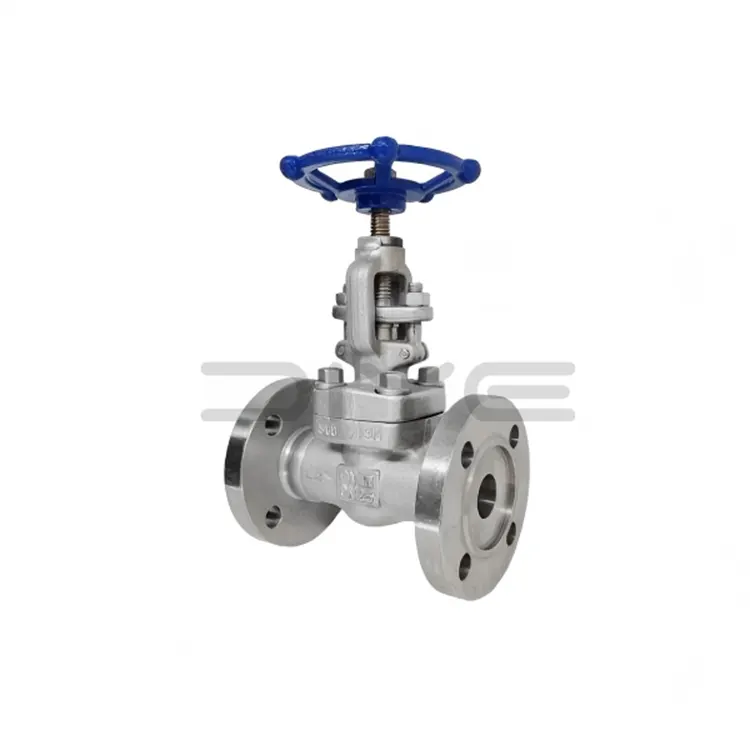
To the untrained eye, gate and globe valves might look similar due to their handwheel-operated stems, but their internal architecture dictates two completely different missions within a pipeline.
The Gate Valve: The Isolation Specialist
The gate valve is designed for one primary function: to be either fully open or fully closed. Inside the body, a flat or wedge-shaped "gate" lowers into the path of the fluid to stop flow. When fully retracted, the gate sits in a bonnet, creating a straight-through path for the media. This straight-line design results in minimal pressure drop, making gate valves ideal for applications where maintaining flow velocity is critical, such as in main water lines or oil transmission pipelines. However, using a gate valve to "crack open" or throttle flow is a mistake; the high-velocity fluid will erode the partially exposed gate, leading to premature failure.
The Globe Valve: The Regulator
Conversely, the globe valve is the industry standard for throttling and flow regulation. Its name derives from its spherical body shape, which houses a baffle that forces the fluid to change direction. As the flow moves through the seat, the disc (or plug) can be positioned at any point to increase or decrease the size of the opening. This S-shaped flow path creates a pressure drop, but it grants the operator supreme control over the flow rate. Whether used in cooling water loops, boiler vents, or fuel systems where flow needs to be fine-tuned, the globe valve remains the preferred choice for applications demanding precise modulation.
We use cookies to offer you a better browsing experience, analyze site traffic and personalize content. By using this site, you agree to our use of cookies. Privacy Policy