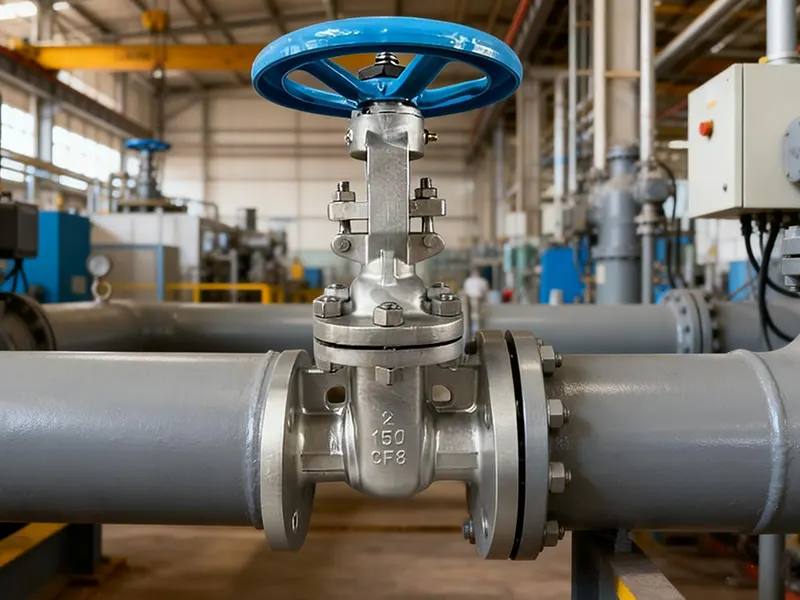
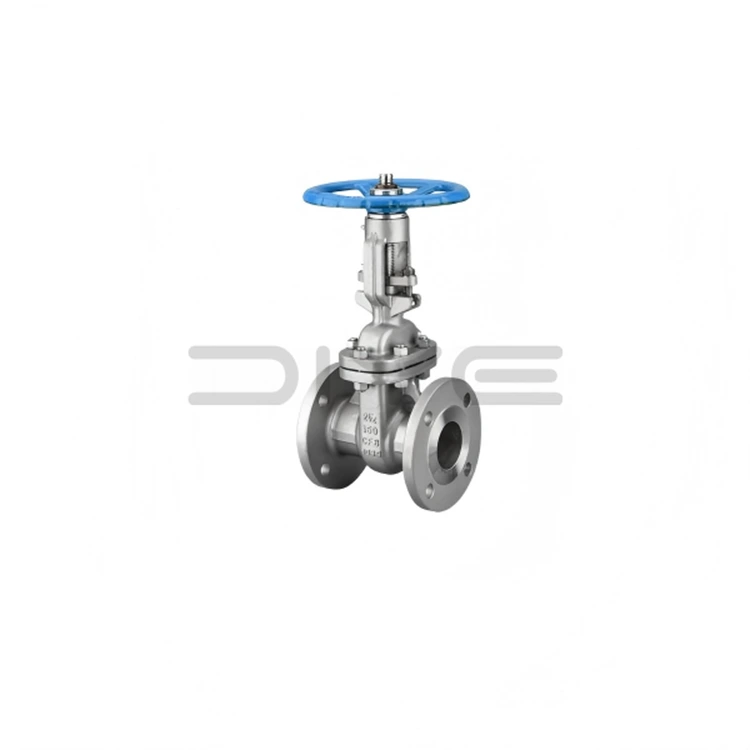
Stainless Steel Grade Selection for Gate Valves
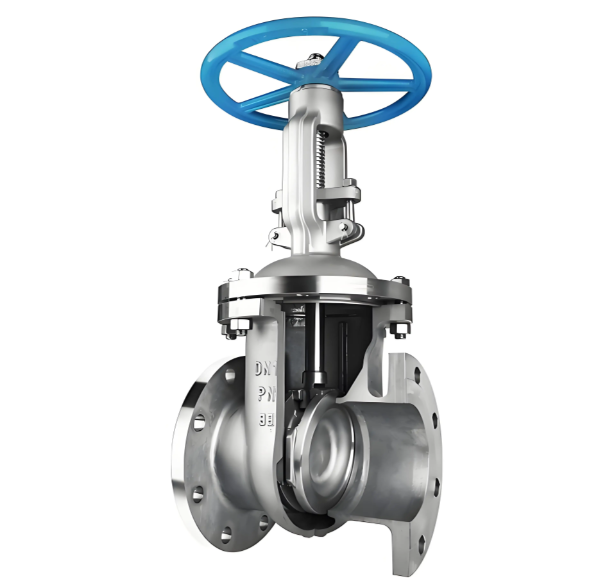
Material Grade Selection for Stainless Steel Gate Valves Material grade selection for stainless steel gate valves is determined by media characteristics, together with temperature‑pressure service conditions. Three widely‑used cast grades are listed below:
CF8 (304 Stainless Steel): Suitable for mildly corrosive media such as dilute nitric acid and organic acids. It can withstand operating temperatures up to 400 °C and delivers the most cost‑effective performance.
CF8M (316 Stainless Steel): Designed for moderately corrosive services including dilute sulfuric acid, phosphoric acid and seawater. Its maximum operating temperature reaches 450 °C; the addition of molybdenum significantly improves resistance to pitting corrosion.
CF3M (Ultra‑low‑carbon 316L Stainless Steel): Preferred for welded assemblies. Its carbon content is kept below 0.03 %, which effectively prevents intergranular corrosion within weld heat‑affected zones.
For special operating conditions, alternative grades are available:
CF8C (347 Stainless Steel): Niobium addition stabilizes carbon and delivers excellent resistance to high‑temperature intergranular corrosion.
CN7M (Alloy 20): Specially formulated for hot concentrated sulfuric acid service.
Grade‑selection procedure:
Confirm the type and concentration of process media
Refer to corrosion‑resistance handbooks to verify corrosion compatibility of candidate grades
Define operating temperature and pressure parameters
Finalize the grade that satisfies both corrosion and pressure‑temperature requirements
Casting & Machining Characteristics of Stainless Steel Gate Valves The casting practice for stainless steel gate valves differs substantially from carbon‑steel gate valves.
Stainless steel exhibits poorer molten‑metal fluidity compared with carbon steel. Pouring temperature must be raised by 50‑80 °C to achieve complete mold filling; excessive temperature, however, causes coarse grain structure and reduced mechanical strength.
Stainless steel also features roughly 1.5‑times higher shrinkage than carbon steel. Larger risers are therefore mandatory in gating‑system design to mitigate severe shrinkage cavities. Harder surface scale forms during casting, making shake‑out and grinding more labor‑intensive.
In machining operations, stainless steel presents poor machinability and strong work‑hardening tendency, which accelerates tool wear. Practical countermeasures include adopting YG‑series cemented‑carbide cutting tools, reducing cutting speed to 60‑70 % of typical values for carbon steel, and applying higher feed rates to avoid tool dwell on work‑hardened surface layers.
Special attention should be paid to hard‑facing of sealing surfaces. Mismatched thermal expansion coefficients between stainless‑steel base metal and Stellite hard‑facing deposits may induce residual stress and component distortion after welding.Surface Treatment and Passivation for Stainless Steel Gate ValvesDespite the intrinsic corrosion resistance of stainless steel, proper surface finishing and passivation remain critical for reliable service life.
Internal surface treatment:
Internal flow‑paths are blast‑cleaned to remove casting scale and residual sand. Components are then treated with mixed nitric‑hydrofluoric acid passivating solution. This treatment eliminates surface free‑iron contamination and generates a uniform, dense chromium‑oxide passive film of 2‑5 nm thickness — the core barrier providing corrosion protection.
Passivation quality is validated via the blue‑spot test: test solution (potassium ferricyanide plus nitric acid) is applied onto the surface. A passing result shows no blue discoloration within 30 seconds; blue spots indicate residual free‑iron contamination.
External surface treatment:
Normally, stainless‑steel gate valves require no external paint coating thanks to good atmospheric corrosion resistance. When project specifications mandate painted marking, an epoxy primer must be applied first to overcome poor paint adhesion on smooth stainless‑steel surfaces, followed by topcoat application.
Flange sealing faces are coated with anti‑rust grease for temporary protection during transport and storage, avoiding surface rust spots that would compromise sealing performance.
Related News
- What Is a Forged Steel Gate Valve and How Does It Support Reliable Industrial Flow Control?
- Stainless Steel ANSI 150LB Flanged Y Strainer for Reliable Pipeline Filtration
- Stainless Steel Ball Valve Complete Testing Process | Standard Inspection & Quality Assurance
- Sanitary 3-Piece Butterfly Valve for Hygienic Fluid Control Systems
- Sanitary Union Check Valve Trends in Modern Hygienic Fluid Processing
- Two-Piece Flange Ball Valve: Structural Principles, Installation Rules and Application Limitations
Leave me a message