Two-Piece Flange Ball Valve: Structural Principles, Installation Rules and Application Limitations
Two-Piece Flange Ball Valve: Structural Principles, Installation Rules and Application Limitations
Most on-site failures and selection errors in industrial fluid systems stem from a superficial understanding of valve characteristics. Many engineering practitioners regard two-piece flange ball valves as ordinary on-off components, ignoring their structural trade-offs, pressure-bearing limits and inherent installation logic.Compared with one-piece ball valves that lack pressure resistance and three-piece ball valves with high maintenance costs, two-piece flange ball valves deliver the optimal balance of structural strength, cost efficiency and operational stability for general industrial applications. However, its unique structural design comes with clear installation boundaries and applicable working conditions. In most cases, common defects such as leakage, jamming and valve body damage are not caused by product quality issues, but by improper installation and mismatched working conditions.This article breaks down fragmented basic tutorials and industry stereotypes. It conducts an in-depth analysis of two-piece flange ball valves from structural essence, vertical and horizontal installation logic, standard operation guidelines, forbidden application scenarios and frequently asked questions, providing practical and professional references for pipeline design, field installation and daily maintenance.
1. What Is a Two-Piece Flange Ball Valve?
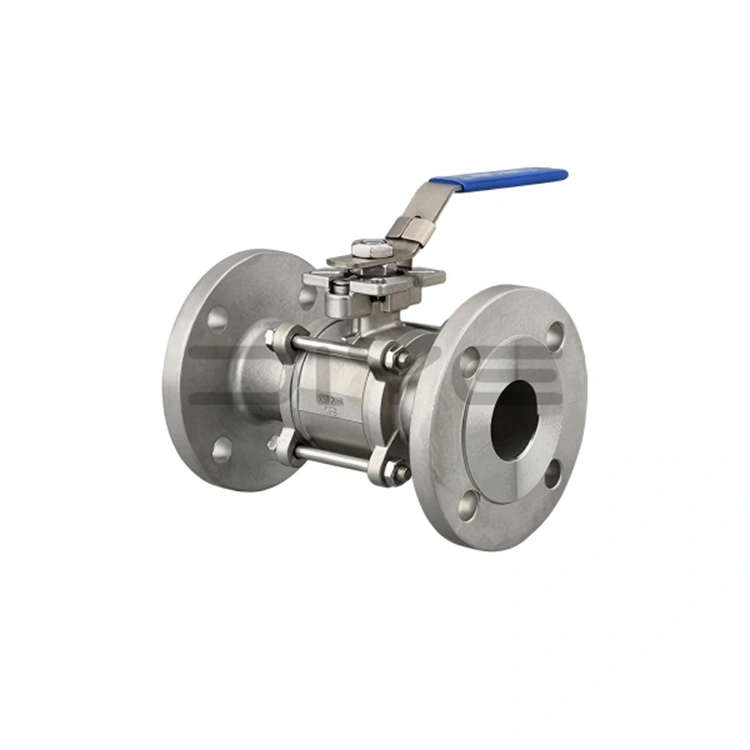
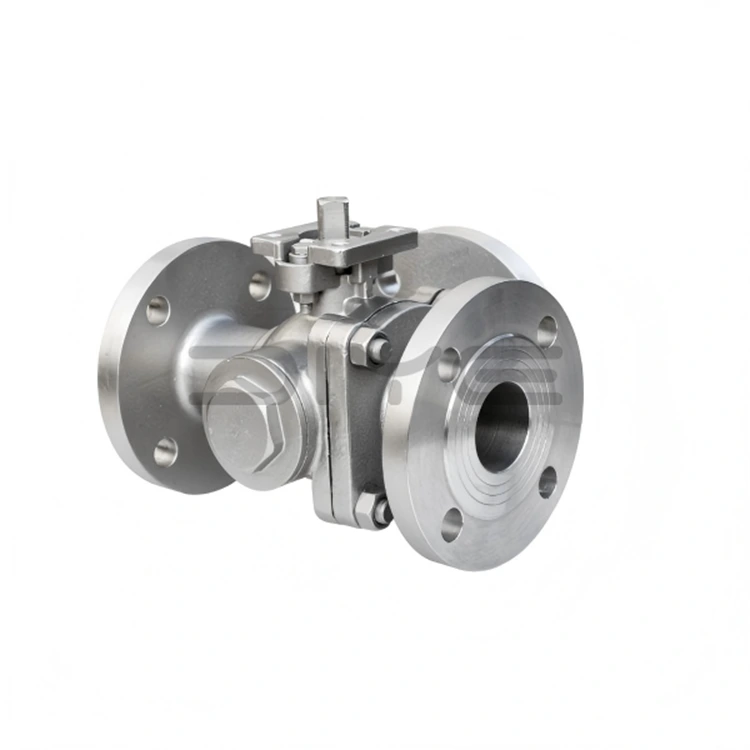
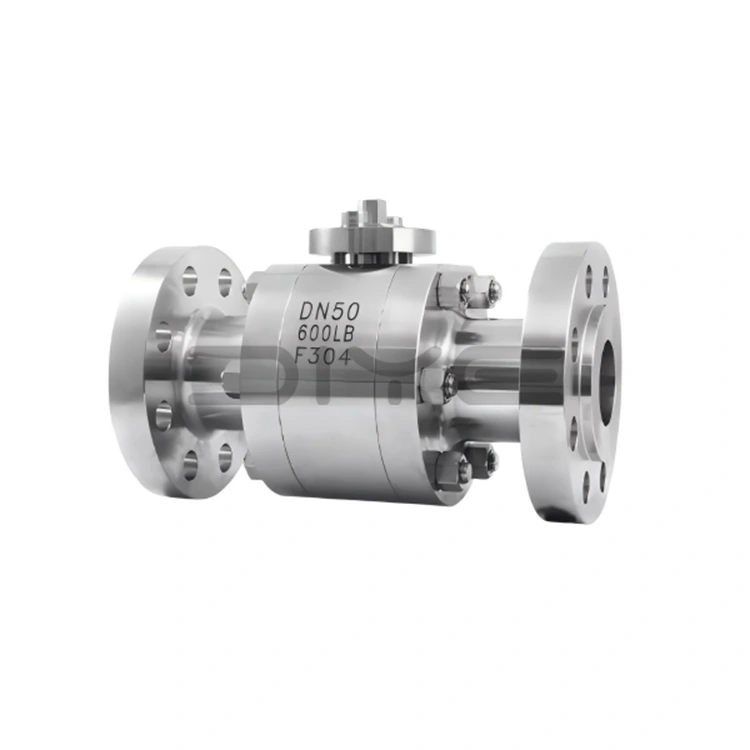
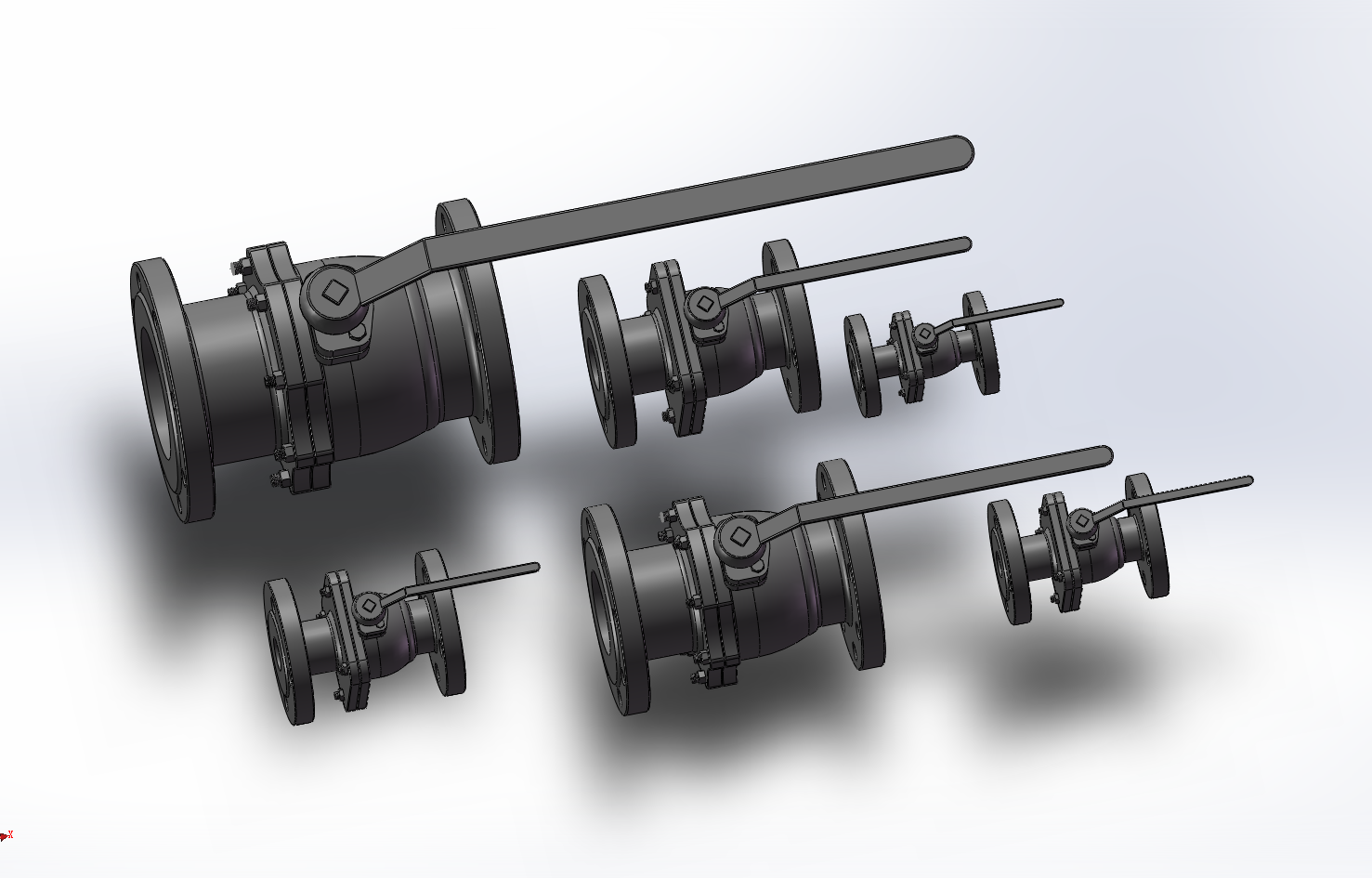
A two-piece flange ball valve features a split two-section valve body and integrated flange connection structure. It is assembled by a main valve body and a bonnet, fastened with high-strength bolts, and equipped with precision internal components including balls, valve seats and stem sealing assemblies. Occupying a middle position between one-piece and three-piece ball valves, it serves as the mainstream standard valve for civil engineering, light industry, general chemical and municipal fluid systems.Many engineers confuse the three types of ball valves due to a lack of in-depth understanding of their structural trade-offs. One-piece ball valves are low-cost with integral casting structures but limited pressure resistance and almost no maintainability. Three-piece ball valves support inline disassembly and component replacement, ideal for harsh working conditions yet with higher overall costs.The two-piece design fills the market gap perfectly. It retains reliable tightness and structural rigidity of split valves, makes up for the pressure defect of integral valves, and avoids the complex disassembly structure of three-piece valves. In terms of engineering positioning, it is not a professional valve for extreme working conditions, but a standardized and cost-effective solution for most general fluid systems.It adopts a full-port flow design with 90-degree quick switching and bidirectional sealing performance. Compatible with water, oil, conventional gas and weakly corrosive media, it covers pressure grades from PN16 to PN40. With stable operation and low failure rates, it is highly suitable for standardized pipelines that require long-term continuous operation and infrequent maintenance.
2. Can a Two-Piece Flange Ball Valve Be Installed Vertically?
Vertical installation of two-piece flange ball valves has long been a controversial topic in industrial construction. The practical conclusion is clear: vertical installation is feasible but not universally applicable, with strict restrictions on working conditions and installation methods, which is one of the most overlooked on-site pitfalls.Different from gravity-dependent check valves, two-piece ball valves rely on pre-tightened valve seat sealing and ball rotation to realize opening and closing. Theoretically, both horizontal and vertical installation are structurally acceptable. Nevertheless, vertical mounting amplifies hidden risks such as medium sedimentation and stem stress deviation, directly undermining sealing stability and service life.Vertical installation works perfectly for clean media including pure water, clear water and conventional gas under normal temperature and low pressure, with no impact on operating stability. For media containing sediment, solid particles, high viscosity or easy crystallization, vertical installation is not recommended. Impurities will continuously settle at the bottom of the vertical valve body, wearing the precision valve seat surface and causing ball jamming, micro leakage and unsmooth switching — problems rarely seen in horizontally installed valves.In addition, there is an unbreakable rule for vertical installation: the valve stem must never be mounted downward. Handwheels and actuators must face upward or sideways. Downward installation leads to residual medium and impurity accumulation in the stem packing area, causing gradual corrosion, external leakage and unrepairable hidden dangers.
3. Core Installation Guidelines for Two-Piece Flange Ball Valves
Over 80% of late-stage valve failures result from non-standard installation rather than quality defects. Professional installation focuses on eliminating pipeline stress, sealing deviation and medium impact risks, instead of simply aligning bolt holes and fastening screws. The following are field-verified core operation guidelines.
3.1 Pipeline Pre-treatment to Avoid Hidden Abrasion
Thoroughly purge and flush the entire pipeline before installation to remove welding slag, rust, cutting debris and other hard particles. The valve seat of two-piece ball valves adopts a high-precision mirror sealing structure. Tiny hard impurities will cause irreversible scratches and permanent micro leakage, which is the primary cause of short-term failure of new valves.
3.2 Zero-Stress Flange Alignment
Never forcibly pull or squeeze pipelines to align flange holes. The rigid two-piece valve body is prone to micro-deformation under forced stress. When system pressure fluctuates, the deformed valve body will suffer sealing failure or even cracking. Ensure natural fitting of flange surfaces and centered gasket placement for uniform pressure distribution.
3.3 Diagonal and Gradual Bolt Tightening
Fasten flange bolts diagonally and in multiple stages instead of tightening one side completely at once. Asymmetric compression causes unbalanced gasket stress and micro flange deformation, leading to a common on-site problem: no leakage under low pressure but obvious seepage under high pressure.
3.4 Full-Stroke Pressure Test After Installation
Do not put the valve into formal operation immediately after installation. Conduct pressure tests under both fully open and fully closed states to verify sealing performance and check for jamming or stress-induced stuck faults, eliminating potential risks in advance.
3.5 Reserve Sufficient Operation and Maintenance Space
Reserve enough clearance around valve stems, handwheels and electric or pneumatic actuators. Blocked space will hinder daily switching operation and later routine maintenance.
4. Strictly Forbidden Installation Scenarios
While two-piece flange ball valves feature universal stability and cost advantages, they have inherent structural limitations. Improper application in specific scenarios will lead to irreversible wear and potential safety hazards, which are clear engineering taboos.
4.1 Continuous Production Lines Requiring Frequent Maintenance
The two-piece bolted structure cannot support inline replacement of internal wearing parts. Once valve seats or seals wear out, the entire valve must be removed and the pipeline disconnected for maintenance. It is not applicable to 24-hour continuous production scenarios requiring regular cleaning and part replacement, where three-piece ball valves are the only viable option.
4.2 Working Conditions with Particulate, Crystalline or High-Viscosity Media
Unlike three-piece valves that support rapid disassembly and cleaning, two-piece valves cannot be easily disassembled to clear internal deposits. Long-term operation with impure media will cause continuous sealing surface abrasion and ball jamming, sharply increasing failure probability.
4.3 Pipelines with Severe Water Hammer and Frequent Pressure Fluctuations
The two-piece split structure has lower impact resistance compared with integral valves and reinforced three-piece valves. Repeated water hammer impact and drastic pressure changes will loosen fastening bolts and attenuate sealing pre-tightening force, resulting in persistent medium leakage.
4.4 Long-Term Throttling Regulation
Two-piece flange ball valves are designed strictly for on-off control rather than throttling service. Long-term half-open operation will cause high-speed medium scouring on the valve seat, rapidly wearing the mirror sealing layer and causing irreversible leakage. It only allows instantaneous flow adjustment, not continuous throttling.
4.5 Non-Standard Installation in Explosion-Proof Scenarios
For flammable and explosive media, omitting static elimination devices or installing stems downward will cause static accumulation and medium deposition, bringing serious explosion and fire risks.5. Frequently Asked Questions About Two-Piece
5. Frequently Asked Questions About Two-Piece Flange Ball Valve Installation
Q1: Which installation method delivers longer service life, vertical or horizontal?
For clean media with no impurities, installation posture has little impact on service life. For sediment-prone media, horizontal installation is far more stable. It effectively avoids internal impurity deposition and reduces sealing surface wear, making it the preferred solution for complex working conditions.
Q2: Why do valves leak only under high pressure but not low pressure after installation?
Over 90% of such failures are caused by uneven bolt tightening, gasket offset and unreleased pipeline stress. Structural deviations are insignificant under low pressure but amplified under high pressure, leading to sealing failure. The problem can be solved by re-fastening bolts diagonally and eliminating pipeline stress.
Q3: Can two-piece flange ball valves match automatic actuators?
Yes. Standard high-platform two-piece flange ball valves are fully compatible with electric and pneumatic actuators. They support remote automatic control and are cost-effective options for automated fluid pipelines.
Q4: What causes jamming of newly installed valves?
Common causes include sealing surface scratches from pipeline impurities, micro-deformation caused by forced flange alignment, and lack of pressure relief trial operation. These are typical installation errors rather than product quality problems.
Q5: How to choose between two-piece and three-piece flange ball valves?
Select two-piece ball valves for conventional working conditions with low maintenance frequency and cost-control demands. Choose three-piece ball valves for harsh corrosive environments, easily fouled media and continuous production systems requiring inline maintenance. There is no absolute superiority between the two — only scenario-based suitability.
Conclusion
The core engineering value of two-piece flange ball valves lies in their excellent adaptability to most general industrial fluid scenarios. With stable structure, mature performance and controllable costs, they have become basic and core components of modern industrial pipelines. Most valve failures are attributed to working condition mismatch and non-standard installation, rather than inherent product defects.A thorough understanding of its structural trade-offs, installation boundaries and application taboos helps engineers avoid stereotyped installation mistakes, maximize long-term operational stability, reduce overall maintenance costs, and finally realize safe, efficient and sustainable operation of industrial fluid systems.
Related News
- What Is a Forged Steel Gate Valve and How Does It Support Reliable Industrial Flow Control?
- Stainless Steel ANSI 150LB Flanged Y Strainer for Reliable Pipeline Filtration
- Stainless Steel Ball Valve Complete Testing Process | Standard Inspection & Quality Assurance
- Sanitary 3-Piece Butterfly Valve for Hygienic Fluid Control Systems
- Stainless Steel Grade Selection for Gate Valves
- Sanitary Union Check Valve Trends in Modern Hygienic Fluid Processing
Leave me a message