Sanitary 3-Piece Butterfly Valve for Hygienic Fluid Control Systems
In industries where fluid cleanliness, contamination prevention, and reliable flow control are critical, sanitary valves play an important role in maintaining stable production processes. Food and beverage, dairy, pharmaceutical, biotechnology, cosmetics, and other clean-processing industries require valve solutions that combine hygienic design, corrosion resistance, easy maintenance, and dependable sealing performance.
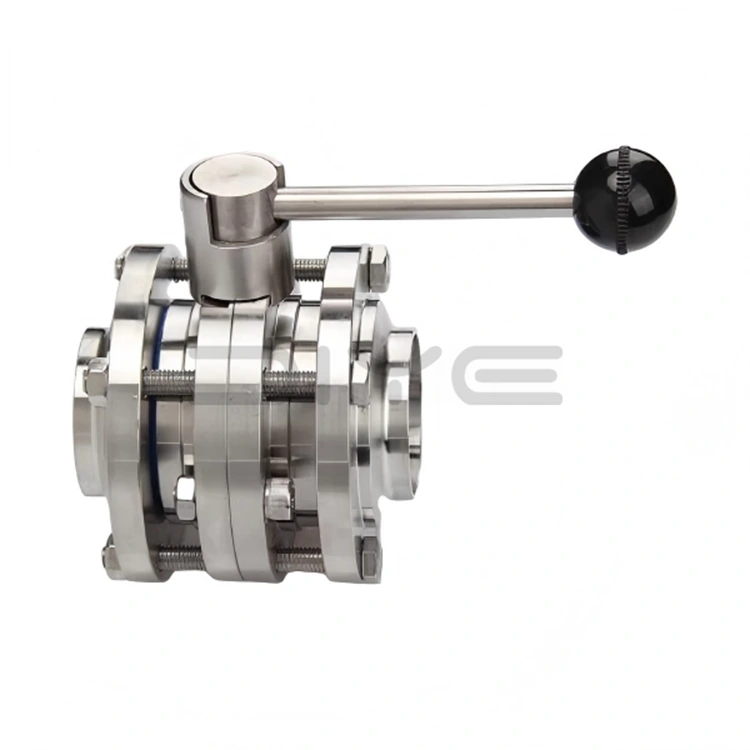
The Sanitary 3-Piece Butterfly Valve from DIYE is designed for clean fluid pipeline applications requiring efficient on-off control and reliable sanitary performance. With a three-piece structure, stainless steel construction, and multiple connection options, this valve is suitable for high-cleanliness processing systems where equipment safety and operational stability are important.
For global distributors, engineering companies, and industrial buyers, selecting a sanitary valve requires careful consideration of material quality, sealing performance, surface finish, connection method, operating conditions, cleaning requirements, and compatibility with the application environment.
Why Sanitary Butterfly Valves Are Important in Clean Industries
Maintaining Hygienic Fluid Processing
Sanitary processing systems require components that minimize product retention and reduce potential contamination risks. Unlike standard industrial valves, sanitary valves are designed with smoother internal structures and materials suitable for frequent cleaning and sterilization processes.
The Sanitary 3-Piece Butterfly Valve provides a compact flow-control solution for applications where maintaining fluid cleanliness is essential.
Efficient Flow Isolation and Control
Butterfly valves operate through the rotation of a disc inside the valve body. This quarter-turn operating principle allows fast opening and closing while requiring relatively compact installation space.
For pipelines handling liquid products, this design helps operators achieve efficient flow isolation while maintaining convenient operation and maintenance.
Core Parameters
| Parameter | Specification / Feature | Buyer Consideration |
|---|---|---|
| Product Type | Sanitary 3-Piece Butterfly Valve | Designed for hygienic fluid control applications |
| Brand | DIYE | Sanitary valve manufacturer and supplier |
| Valve Structure | Three-piece butterfly valve design | Supports convenient installation and maintenance |
| Body Material | Stainless steel construction | Provides corrosion resistance and durability |
| Available Materials | SS304 / SS316L options | Suitable for different hygienic processing requirements |
| Connection Options | Tri-clamp, welding, threaded, and other sanitary connections | Adapts to different pipeline systems |
| Seal Materials | EPDM, Silicone, FKM, PTFE and other options | Selected according to media compatibility |
| Operation | Manual or automated control options | Suitable for different levels of process automation |
| Applications | Food, beverage, dairy, pharmaceutical, cosmetic industries | For clean fluid processing systems |
Actual valve size, pressure rating, temperature range, sealing material, surface finish, connection standard, actuator configuration, and certification requirements should be confirmed according to the specific project conditions.
Structural Advantages of Three-Piece Butterfly Valve Design
Convenient Maintenance Structure
The three-piece structure allows easier inspection, cleaning, and component replacement compared with some integrated valve designs. This can reduce maintenance difficulty when the valve is installed in systems requiring regular service.
For industries with strict hygiene requirements, simplified maintenance can help reduce production interruptions and improve equipment availability.
Compact Installation Design
Butterfly valves generally require less installation space compared with some other valve types. Their compact structure makes them suitable for processing equipment where pipeline space is limited.
This advantage is particularly useful in food processing lines, beverage production equipment, pharmaceutical systems, and compact skid-mounted processing units.
Low Flow Resistance
The internal disc design allows fluid to pass through with relatively low resistance when the valve is fully opened. This can contribute to efficient pipeline operation while reducing unnecessary pressure losses.
For process engineers, valve selection should still consider flow rate, medium characteristics, pressure conditions, and system requirements.
Material Selection for Sanitary Applications
Stainless Steel Valve Body
Stainless steel is commonly selected for sanitary valve applications because it provides corrosion resistance, durability, and compatibility with many clean-processing environments.
Different stainless steel grades offer different performance characteristics. SS316L is often selected for applications requiring enhanced corrosion resistance, while SS304 can meet many general sanitary processing requirements.
Seal Material Compatibility
The sealing element directly contacts the flowing medium, making material selection important for long-term performance.
Different sealing materials provide different resistance characteristics against temperature, chemicals, and specific process fluids. Buyers should select seal materials according to the actual operating environment rather than choosing only based on standard availability.
Surface Finish Requirements
Internal surface quality affects cleaning performance and product flow conditions. A smoother surface can help reduce material accumulation and support more effective cleaning procedures.
For pharmaceutical and high-purity applications, buyers should confirm surface roughness requirements and applicable sanitary standards before production.
Applications of Sanitary 3-Piece Butterfly Valve
Food and Beverage Processing
Food and beverage production requires reliable control of liquids, sauces, dairy products, beverages, and other process materials.
The sanitary design of the valve helps support clean pipeline operation while providing convenient flow isolation during production, cleaning, and maintenance procedures.
Dairy Industry
Dairy processing systems require strict hygiene management because milk-based products can be sensitive to contamination and residue buildup.
Sanitary butterfly valves are commonly used in dairy pipelines for controlling product flow, connecting processing equipment, and supporting cleaning procedures.
Pharmaceutical Manufacturing
Pharmaceutical production environments often require higher levels of cleanliness and process control. Valve materials, sealing systems, and surface finishes must be selected according to the production requirements.
For pharmaceutical projects, buyers should confirm applicable standards, validation requirements, and cleaning procedures before selecting the valve configuration.
Cosmetic and Personal Care Production
Cosmetic manufacturing involves various liquids, emulsions, and viscous materials that require stable transportation and hygienic processing.
A suitable sanitary valve design can help maintain clean fluid pathways while supporting efficient production operations.
Manual and Automated Control Options
Manual Operation
Manual sanitary butterfly valves are commonly used in systems where operators need direct control of pipeline opening and closing.
They are suitable for smaller processing systems, laboratory equipment, pilot production lines, and applications where frequent automated adjustment is not required.
Pneumatic Automation
For automated production lines, pneumatic actuators can provide remote valve operation and integration with process control systems.
Automated control can improve production efficiency by allowing valves to operate according to programmed process conditions.
Selection Based on Production Requirements
The choice between manual and automated operation depends on factors such as production scale, automation level, operating frequency, safety requirements, and control-system compatibility.
Engineering teams should evaluate the complete processing system before selecting the actuator configuration.
Quality Factors for Sanitary Valve Procurement
Pressure and Leakage Testing
Reliable sealing performance is essential for sanitary fluid control systems. Valve manufacturers should perform appropriate pressure and sealing inspections before delivery.
Testing helps identify potential leakage risks and ensures that the valve performs according to the required operating conditions.
Machining Accuracy
Precision machining affects valve assembly accuracy, sealing performance, and service life. Components such as the valve body, disc, shaft, and sealing parts must maintain proper dimensional consistency.
For industrial buyers, manufacturing capability and inspection procedures are important evaluation factors when selecting a valve supplier.
Cleaning and Packaging
Sanitary valves should be properly cleaned before shipment to prevent contamination during installation.
Packaging should also protect the valve surfaces, connection areas, and sealing components during transportation and storage.
Installation Considerations
Confirm Pipeline Compatibility
Before installation, buyers should verify valve size, connection type, pressure requirements, temperature conditions, and pipeline standards.
Incorrect specification matching may affect sealing performance and reduce equipment reliability.
Follow Correct Installation Procedures
Proper installation helps ensure stable valve operation. Installation should consider flow direction, connection alignment, sealing condition, and accessibility for future maintenance.
For automated valves, actuator installation and control-system connection should also be checked carefully.
Regular Inspection and Maintenance
Routine inspection can help identify seal wear, abnormal operation, leakage, or other issues before they affect production.
Maintenance frequency should be determined according to operating conditions, cleaning procedures, working media, and production requirements.
How to Choose the Right Sanitary Butterfly Valve
Evaluate the Processing Medium
The characteristics of the transported medium directly influence valve selection. Factors such as viscosity, temperature, chemical compatibility, and cleanliness requirements should be considered.
Check Connection Standards
Sanitary pipelines may use different connection standards depending on regional requirements and equipment design.
Buyers should confirm whether the valve connection matches existing pipeline systems before ordering.
Consider Future Maintenance Needs
A valve should not only meet current production requirements but also support long-term maintenance and replacement needs.
Easy access to components, availability of spare parts, and supplier technical support can influence the total operating cost of the system.
Why DIYE Is Relevant to Sanitary Valve Procurement
DIYE focuses on sanitary valve manufacturing and provides hygienic fluid control solutions for industries including food, beverage, dairy, pharmaceutical, cosmetics, and other clean-processing fields.
The company provides sanitary butterfly valves, sanitary ball valves, sanitary diaphragm valves, sanitary check valves, and related sanitary fittings for different pipeline applications.
With experience in sanitary fluid-control products, DIYE supports customized specifications, different connection methods, material options, and application-based solutions for global industrial customers.
Final Considerations
The Sanitary 3-Piece Butterfly Valve is an important flow-control component for industries requiring hygienic processing, reliable sealing, and efficient pipeline management. Its compact structure, stainless steel construction, flexible connection options, and maintenance-friendly design make it suitable for a wide range of clean fluid applications.
The Sanitary 3-Piece Butterfly Valve from DIYE provides a practical solution for food processing, beverage production, dairy systems, pharmaceutical manufacturing, cosmetics, and other industries where cleanliness and operational reliability are essential.
For distributors, engineering contractors, and industrial buyers, the best procurement approach is to confirm material requirements, seal compatibility, connection standards, operating conditions, automation needs, and quality-control procedures before placing orders. A properly selected sanitary valve can improve process stability, reduce maintenance requirements, and support long-term production efficiency.
Related News
- What Is a Forged Steel Gate Valve and How Does It Support Reliable Industrial Flow Control?
- Stainless Steel ANSI 150LB Flanged Y Strainer for Reliable Pipeline Filtration
- Stainless Steel Ball Valve Complete Testing Process | Standard Inspection & Quality Assurance
- Stainless Steel Grade Selection for Gate Valves
- Sanitary Union Check Valve Trends in Modern Hygienic Fluid Processing
- Two-Piece Flange Ball Valve: Structural Principles, Installation Rules and Application Limitations
Leave me a message