1PC vs 2PC vs 3PC Stainless Steel Threaded Ball Valve Selection Guide
1PC vs 2PC vs 3PC Stainless Steel Threaded Ball Valve Selection Guide
Stainless steel threaded ball valves are staple components for fluid control in industrial piping systems. Thanks to their compact build, fast switch operation, reliable sealing and simple installation, they are widely adopted in water treatment, chemical processing, petroleum delivery, industrial heating and various general piping projects. Most overseas buyers and engineering contractors struggle to tell the differences between 1PC, 2PC and 3PC threaded ball valves. These three types vary greatly in structural design, cost bearing, pressure tolerance, safety performance and applicable scenarios. Picking the wrong valve type can easily cause pipe leakage, troublesome maintenance issues, and even hidden safety hazards for the entire project. This practical guide breaks down the characteristics of 1PC, 2PC and 3PC stainless steel threaded ball valves, helping engineers and purchasers select the right model for specific working conditions.
1. What Is 1PC Threaded Ball Valve?
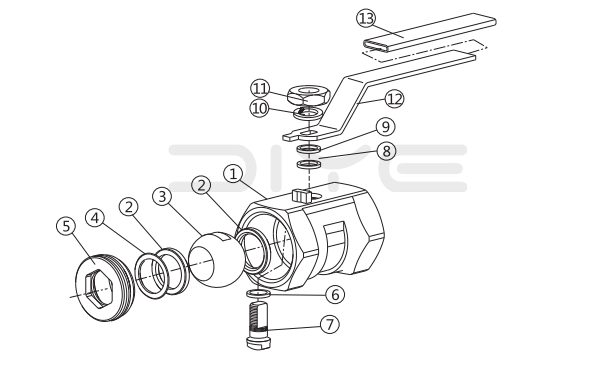
The 1PC threaded ball valve, or one-piece ball valve, features an integrated forged stainless steel body. It is the most compact and lightweight option among all threaded ball valve designs. The ball core and sealing accessories are assembled from a single side, resulting in an ultra-simple structure with minimal assembly gaps and fewer vulnerable parts.
Features and advantages: This valve type comes with a low production cost, small footprint and light weight. It delivers solid sealing performance with almost no external leakage. The one-piece integrated structure effectively prevents body loosening and medium penetration during long-term operation.
Limitations: The integral forging structure limits its pressure resistance, which is lower than that of 2PC and 3PC models. Since the valve body cannot be disassembled for maintenance, users have to replace the entire valve once the internal sealing ring or core components get damaged.
Applicable working conditions: It fits low-pressure and conventional pipeline systems perfectly, including regular water supply, common gas delivery and non-corrosive liquid transmission. It is the most cost-effective choice for ordinary civil projects and budget-friendly industrial supporting piping systems.
2. What Is 2PC Threaded Ball Valve?
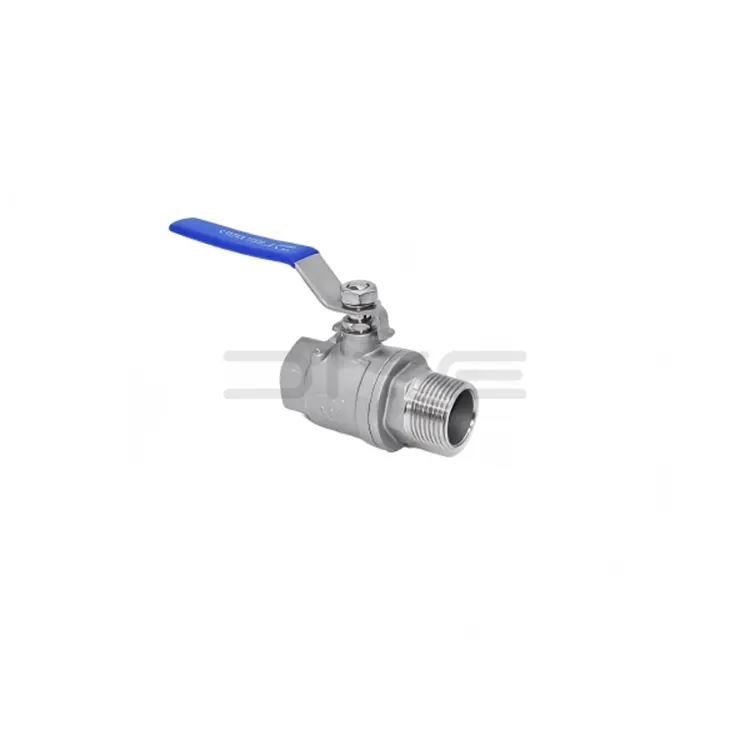
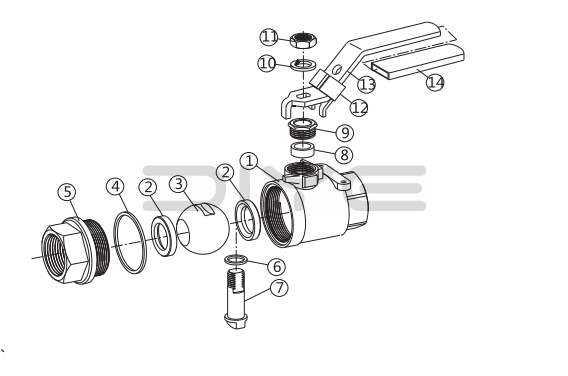
The 2PC threaded ball valve adopts a two-piece split structure, consisting of a primary and a secondary valve body fixed tightly by threads or bolts. As the most popular and versatile model in the global industrial valve market, it strikes a perfect balance between affordable pricing, stable performance and easy maintenance.
Features and advantages: Priced moderately, this valve boasts better pressure resistance than 1PC alternatives and maintains stable sealing in most industrial environments. Its detachable two-piece structure allows workers to disassemble the valve partially for internal cleaning, ball core replacement and PTFE seal renewal, which greatly cuts down later maintenance costs. The overall structure is sturdy enough to withstand frequent medium pressure impact without loosening.
Limitations: It is slightly larger and heavier than 1PC ball valves, and is not suitable for ultra-high pressure pipelines or critical high-risk industrial systems with strict operation standards.
Applicable working conditions: It is widely applied in medium-pressure industrial pipelines, chemical fluid transportation, industrial heating systems, oil and gas auxiliary pipelines, food processing equipment and conventional overseas engineering projects. Most international standard OEM orders prefer 2PC threaded ball valves for their reliable quality and outstanding cost performance.
3. What Is 3PC Threaded Ball Valve?
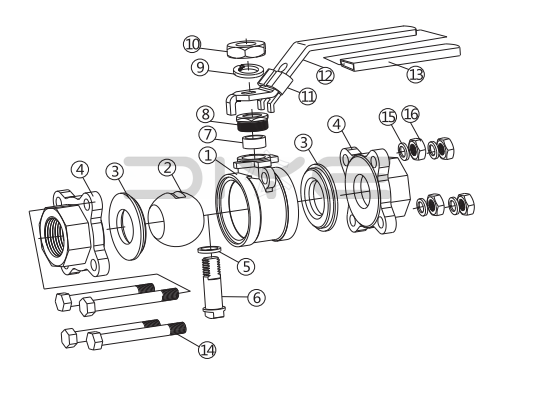
The 3PC threaded ball valve is assembled from three independent parts: left valve body, right valve body and middle valve body. The ball core and all sealing components are fully enclosed in the middle body, with firm double-sided bolt fastening. This structural design makes it the highest-grade and most reliable threaded ball valve on the market.
Features and advantages: This valve delivers excellent high-pressure resistance, explosion-proof capability and zero-leakage performance with an extremely stable structure. The full-enclosed ball core design effectively avoids component damage caused by direct medium impact. It supports complete disassembly, thorough internal cleaning and full replacement of all accessories, enabling repeated long-term use. Its overall service life far exceeds that of 1PC and 2PC ball valves.
Limitations: The complex three-piece structure leads to higher manufacturing costs and higher unit prices. Meanwhile, it features a larger size and heavier weight compared with 1PC and 2PC models.
Applicable working conditions: It is the top choice for high-pressure, high-precision and high-risk industrial pipeline systems, including corrosive chemical media, high-temperature steam pipelines, petroleum transmission lines, pharmaceutical production equipment, continuously operating industrial facilities and high-standard international engineering projects.
4. Core Differences Between 1PC / 2PC / 3PC Ball Valves
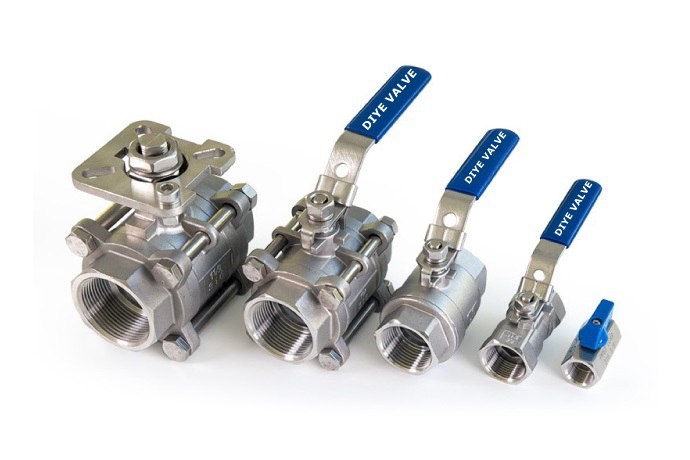
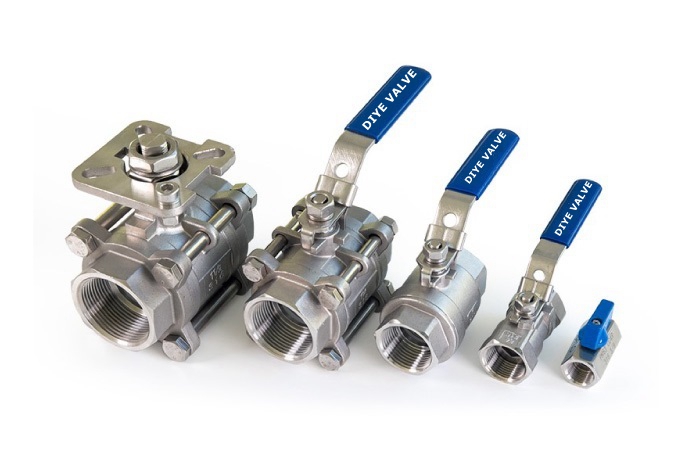
For on-site procurement and engineering design, users can select the proper valve type based on actual pipeline pressure, medium properties and later maintenance demands:1PC: Ideal for low-pressure pipelines with ordinary non-corrosive media, suitable for projects with tight budgets and no need for regular maintenance.2PC: Perfect for medium-pressure pipelines with common industrial media. It balances quality, performance and cost perfectly and allows routine maintenance, making it the most widely exported and commonly used threaded ball valve type.3PC: Designed for high-pressure, high-temperature and corrosive working scenarios, meeting strict industrial safety standards and long-term service life requirements.
5. FAQ for Threaded Ball Valve Selection
Q1: Which type works best for export engineering projects?
A: Most conventional overseas projects opt for 2PC stainless steel threaded ball valves. These valves comply with ISO, CE and other mainstream international standards, featuring stable performance and competitive pricing. For high-end industrial and high-risk projects, 3PC ball valves are the more reliable choice.
Q2: Can 1PC ball valves be used for chemical pipelines?
A: No. 1PC ball valves are only applicable to low-pressure and non-corrosive media. For corrosive liquid and gas in chemical industry, 2PC or 3PC ball valves made of 304 or 316 stainless steel are mandatory to ensure stable operation.
Q3: Do 3PC ball valves achieve zero leakage?
A: Premium 3PC threaded ball valves adopt a fully enclosed structural design and high-precision PTFE sealing accessories. They can realize complete zero leakage under rated working pressure, fully meeting strict sealing requirements for high-standard industrial pipelines.
6. Conclusion
Conclusion1PC, 2PC and 3PC threaded ball valves correspond to low, medium and high-grade industrial pipeline application scenarios respectively. In valve selection, there is no one-size-fits-all best option, only the most suitable one for actual working conditions. Diye Valve offers a full range of 1PC, 2PC and 3PC stainless steel threaded ball valves in 304 and 316 stainless steel grades. All our products conform to international pressure standards, undergo rigorous pressure and sealing tests before delivery, and support customized solutions to meet diverse global project procurement needs.
Related News
- What Is a Forged Steel Gate Valve and How Does It Support Reliable Industrial Flow Control?
- Stainless Steel ANSI 150LB Flanged Y Strainer for Reliable Pipeline Filtration
- Stainless Steel Ball Valve Complete Testing Process | Standard Inspection & Quality Assurance
- Sanitary 3-Piece Butterfly Valve for Hygienic Fluid Control Systems
- Stainless Steel Grade Selection for Gate Valves
- Sanitary Union Check Valve Trends in Modern Hygienic Fluid Processing
Leave me a message